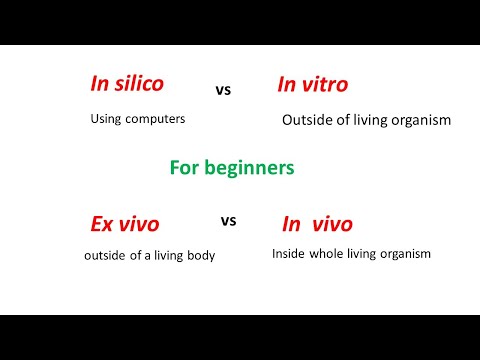
When it comes to understanding health and biology, you might stumble upon terms like “in vivo” and “in vitro.” While they sound similar, these phrases signify two very different approaches to research. Imagine in vivo as a live theater performance, where every actor interacts with one another in real-time. In contrast, in vitro is like a film set, where scenes are carefully crafted under controlled conditions, allowing for precise study without outside interference.
Both methods play crucial roles in scientific research. They help researchers uncover the mysteries of diseases and test new treatments. However, knowing when to apply each method is vital for drawing accurate conclusions.
But here’s an important point: While these concepts are foundational for understanding medical studies, relying solely on one source or perspective can be misleading. Always seek out information from various specialists and credible media. This multi-faceted approach helps ensure you get a comprehensive view of complex topics like health and science. Remember, informed decisions come from asking questions and seeking clarity!
The information provided in this article is intended solely for general informational and educational purposes. It does not constitute medical advice, diagnosis or professional treatment, and should not be considered a substitute for consultation with a qualified doctor or other licensed healthcare professional. Any health-related decisions should be made in consultation with accredited medical professionals.
While efforts have been made to ensure the information is accurate and up to date, no guarantees are given—either express or implied—regarding its accuracy, completeness, currency or suitability. Use of this information is at your own discretion.
It is strongly recommended to consult official sources such as the NHS (National Health Service) or other recognised medical institutions before acting on any information contained on this website or article. Under no circumstances should professional medical advice be ignored or delayed due to content read here.
This content is of a general and informational nature only. It is not intended to replace individualised guidance from a healthcare professional or to establish any doctor-patient relationship. The publication of this information does not imply any professional responsibility, guarantee or obligation on the part of the author or this site.
Unpacking the Science Behind Two Key Research Approaches
When it comes to research in health and medicine, understanding different approaches is key. Two common methods are in vivo and in vitro. Each has its unique strengths and weaknesses.
In vitro research means “in glass.” It usually takes place in a lab setting using cells or tissues grown on dishes. Think of it like cooking a meal with all the ingredients neatly arranged on your kitchen counter. This method allows scientists to examine specific interactions without the complexity of an entire organism.
However, because it lacks the whole organism’s context, results may not always reflect what happens in a living being.
On the other hand, in vivo research means “in life.” This approach involves studying living organisms—like animals or humans. Returning to our cooking analogy, it’s like serving that meal to family at the dinner table. You get feedback based on how everything works together.
Yet, in vivo studies can be more costly, time-consuming, and ethically complex due to the use of living subjects.
In summary, both in vitro and in vivo research play crucial roles in understanding health science. While in vitro gives focused insights into specific processes, in vivo offers a broader picture of how those processes function within a living organism.
Each approach contributes valuable data that shapes our knowledge but also has limitations that researchers need to consider carefully. By combining findings from both methods, scientists can enhance their understanding and improve health outcomes over time.
Exploring the Distinct Roles of Enzymes in Living Organisms and Laboratory Settings
Enzymes are fascinating molecules that play a crucial role in both living organisms and laboratory settings. They are essentially biological catalysts, meaning they help speed up chemical reactions without being consumed in the process.
In living organisms, enzymes facilitate vital processes like digestion and metabolism. Think of them as workers in a factory, each with specific tasks to ensure everything operates smoothly. For example, the enzyme amylase breaks down carbohydrates in your mouth, starting the digestive process before food even reaches your stomach.
In contrast, when we talk about enzymes in laboratory settings—often called in vitro—we’re observing these molecules outside their natural environment. Here, scientists can study enzymes under controlled conditions. This is similar to watching a car engine run on a test bench rather than while driving on the road.
Here are some key differences between in vivo (inside a living organism) and in vitro (outside) enzyme activity:
One important thing to remember is that results from in vitro studies don’t always replicate what happens in vivo. It’s like studying how a seed grows in perfect soil versus trying to grow it outside with changing weather conditions.
Enzymes also have distinct properties depending on their environment. Factors such as temperature and pH can impact how well an enzyme works. For example, some enzymes work best at body temperature while others may thrive at higher temperatures found during lab experiments.
Additionally, researchers use these differences to their advantage when developing drugs or studying disease mechanisms. Understanding how enzymes function both inside our bodies and under controlled lab settings helps inform better health decisions.
Myths can surround this topic too. Some people believe that all enzyme supplements are beneficial for health markers; however, scientific evidence doesn’t support this blanket statement across all individuals or conditions.
By exploring how enzymes operate differently in vivo vs. in vitro, we gain valuable insights into biology and medicine. Ultimately, this knowledge empowers us to make informed choices about our health and understand the science behind it better.
Exploring the Worlds of Life and Lab: Understanding Replication Methods
Understanding the methods researchers use to study life can feel overwhelming. Two important concepts in this realm are **in vivo** and **in vitro**.
**In vivo** refers to experiments conducted within a living organism. Think of it like observing wildlife in their natural habitat. You get a fuller picture because all the interactions and complexities of life are at play.
On the flip side, **in vitro** means “in glass,” where studies occur outside of a living body, often in test tubes or Petri dishes. Imagine a lab where scientists mix chemicals and analyze reactions without the influence of an entire organism’s biology.
Both methods have their strengths and weaknesses.
Researchers often start with in vitro studies to identify potential effects before moving to in vivo tests. This stepwise approach helps minimize risk and optimize outcomes.
There are also ethical considerations involved. In vitro methods reduce the need for animal testing, which many people find preferable. It aligns with a growing focus on humane research practices.
Even though these terms sound complex, they serve as essential tools for understanding biology. They create pathways for innovation in medicine and health advancements by helping scientists figure out how new treatments might work before they’re given to people.
By appreciating these methods, we can make more informed decisions about health-related topics when discussing new treatments or therapies that may come from such research. Always remember that science is about evolving knowledge; what we understand today might change tomorrow as new discoveries are made!
Understanding the difference between in vivo and in vitro studies is crucial for anyone interested in biology, medicine, or health research. These terms describe two distinct environments where experiments can take place.
In vitro refers to studies conducted outside a living organism, typically in a controlled lab setting using cells or tissues. Think of it like cooking a meal in your kitchen—you control every ingredient and step. This method allows researchers to pinpoint specific biological processes without the complexity of an entire organism.
On the other hand, in vivo translates to “within the living.” These experiments are performed on whole organisms, such as animals or humans. Imagine trying a new recipe at a restaurant to see how customers react—there are many variables at play that you can’t control. In vivo studies provide insights that reflect real-life interactions within an entire biological system.
Both approaches have strengths and weaknesses. In vitro experiments offer precise control and flexibility but may not fully replicate the whole body’s responses. Conversely, while in vivo studies give a more complete picture of biological interactions, they often deal with ethical considerations and complexities not present in simplified models.
Understanding these differences is essential when interpreting research findings. Each method serves its purpose, contributing valuable knowledge to science and medicine while reminding us of the intricate nature of life itself.