The information provided in this article is intended solely for general informational and educational purposes. It does not constitute medical advice, diagnosis or professional treatment, and should not be considered a substitute for consultation with a qualified doctor or other licensed healthcare professional. Any health-related decisions should be made in consultation with accredited medical professionals.
While efforts have been made to ensure the information is accurate and up to date, no guarantees are given—either express or implied—regarding its accuracy, completeness, currency or suitability. Use of this information is at your own discretion.
It is strongly recommended to consult official sources such as the NHS (National Health Service) or other recognised medical institutions before acting on any information contained on this website or article. Under no circumstances should professional medical advice be ignored or delayed due to content read here.
This content is of a general and informational nature only. It is not intended to replace individualised guidance from a healthcare professional or to establish any doctor-patient relationship. The publication of this information does not imply any professional responsibility, guarantee or obligation on the part of the author or this site.
Have you ever noticed a patch of skin that seems a bit rough or dry? Or perhaps you’ve spotted an unusual mole and started to worry? You’re not alone. Many people encounter skin conditions that can be confusing and sometimes worrying.
This article dives into actinic keratosis, moles, nevi, and psoriasis. Each of these conditions has unique characteristics but understanding them is crucial for keeping your skin healthy. Knowing what to look for can help you spot changes early.
Actinic keratosis, for example, occurs due to sun exposure and might feel like sandpaper on your skin. Moles are more common; some are totally harmless while others need monitoring. Psoriasis is another story altogether; it’s a chronic condition that can affect both skin and overall wellbeing.
While this content provides helpful information, it doesn’t replace professional medical advice. It’s always essential to consult a healthcare professional before making health decisions based on this article. Let’s unravel these topics together so you can feel more informed and empowered about your skin health!
A Visual Guide to Understanding Actinic Keratosis Through NHS Images
Understanding Actinic Keratosis
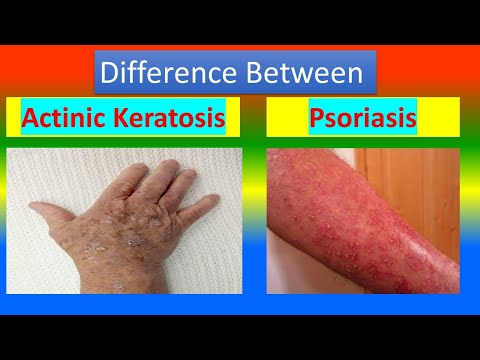
Actinic keratosis is a common skin condition. It emerges due to long-term sun exposure. Think of it like your skin saying, “Hey, I need some care!” It often appears as rough, scaly patches on sun-exposed areas like the face, ears, and neck.
Typically, actinic keratosis starts small. You might notice a tiny bump or dry patch that just doesn’t seem to go away. Over time, this can grow and change color. Sometimes it might even feel itchy or uncomfortable.
Moles and Nevus
Moles are clusters of pigmented cells called melanocytes. Nevus is just a fancy term for moles in medical lingo. Most moles are harmless but keeping an eye on them is important.
If you see changes in size, shape, or color of a mole, that’s worth mentioning to someone who knows about these things. Some moles can become atypical—meaning they look different—and could signal skin issues.
Psoriasis: A Quick Look
Psoriasis is another skin condition but quite different from actinic keratosis. It’s an autoimmune disease where the immune system mistakenly attacks healthy skin cells.
This causes rapid skin cell production leading to thick, red patches covered with white scales. They may itch or burn and can appear anywhere on the body.
The Visual Aspect: NHS Images
NHS images provide a helpful visual guide for understanding these conditions better. When you see pictures of actinic keratosis compared to normal skin or even psoriasis, it helps make things clearer.
- Look at the textures: Actinic keratosis tends to be rough and may flake off.
- Mole images show smooth edges while atypical ones can look jagged or uneven.
- Psoriasis images reveal silvery scales that stand out against red patches.
Catching Changes Early
The key with any skin condition is noticing changes early on. Regularly checking your skin can help you spot new growths or alterations in existing moles. It’s like doing a routine check-up but at home!
If something feels off or looks unusual—it’s always good idea to chat with someone who knows about these things!
A Final Thought
Exploring these visual guides from NHS allows you to become more aware of your own skin health. Remember though; visuals are just part of the puzzle so keep learning!
A Visual Guide to Understanding Seborrhoeic Keratosis
Seborrhoeic keratosis is a common skin condition. It appears as raised, scaly, and sometimes itchy growths on the skin. These growths can range in color from light tan to black. You might see them mostly on the face, chest, back, or scalp. But don’t worry—these spots are usually harmless.
What Are They?
So, what’s really happening with seborrhoeic keratosis? Think of it like your skin getting a little overzealous with its cell production. The outer layer of skin cells multiplies too quickly and forms these growths. It’s not contagious and isn’t caused by any infection.
Actinic Keratosis vs. Seborrhoeic Keratosis
You might confuse seborrhoeic keratosis with actinic keratosis. Actinic keratoses are rough spots that develop due to sun damage, often seen in older adults or those who spend lots of time outside without sunscreen. While both can appear similar at first glance, actinic keratoses carry a risk of becoming cancerous if left untreated.
Moles and Nevi
Moles (or nevi) are another common skin feature but differ from seborrhoeic keratosis. Moles are clusters of pigmented cells and can be flat or raised—but they tend to be more uniform in color compared to seborrhoeic keratosis. Most moles are harmless but keeping an eye on any changes is important.
Is It Psoriasis?
People sometimes wonder if what they have is psoriasis instead of seborrhoeic keratosis. Psoriasis usually shows up as red patches covered with thick silvery scales—quite different from the typical brownish hue of seborrhoeic keratosis lesions.
When To Seek Help
If you notice any new growths or changes in existing spots on your skin, it’s always wise to check with a healthcare professional. They might do a biopsy—a small tissue sample—to rule out anything serious.
Treatment Options
Treatment is often not necessary unless the lesions become bothersome or unsightly for you. In those cases, they can be removed through various methods such as cryotherapy (freezing), laser treatment, or even simple surgery.
- They’re common and often found in older adults.
- Usually harmless but check for changes regularly.
- Distinguishing between similar conditions helps ensure proper care.
- If unsure about your skin’s health, consulting a professional is key!
The bottom line? Seborrhoeic keratoses may seem alarming at first sight, but most times they’re just part of aging gracefully! Just keep an eye on your skin health—it’s always a good idea!
A Visual Journey Through Varied Skin Changes From Sun Exposure
Sun exposure can really change the skin’s appearance over time. It’s like a map of our history, showing where we’ve been and how long we’ve spent in the sun. Some changes are normal, while others might need a closer look.
Understanding Actinic Keratosis
Actinic keratosis is often a rough, scaly patch on sun-exposed skin. Think of it as the skin’s alarm system saying, “Hey, I’ve had too much sun.” These patches can be a sign of early skin damage and may lead to more serious problems if ignored.
Imagine you’ve left your car in the sun for too long—and you find cracks in the dashboard. That’s kind of what happens to our skin with prolonged sun exposure. It’s an early warning that something isn’t quite right.
Moles and Nevi
Moles, or nevi (pronounced nee-vye), are common and usually harmless spots on our skin. They can be different shapes and colors—some might even blend into your natural complexion! Most people have moles; they’re just part of being human.
However, keep an eye on them! If any mole changes shape, color, or size quickly, it’s worth getting checked out. They’re like those little notifications on your phone—you pay attention when they start acting funky!
The Role of Psoriasis
Psoriasis is a different type of skin condition that can also be influenced by sunlight. It often appears as red patches covered with thick silvery scales. Imagine having leftover paint that dries up—it gets thick and crusty over time.
For some people, sunlight may actually help lessen psoriasis symptoms due to vitamin D production—but this isn’t universal for everyone! Sometimes the wrong amount of sun can make things worse instead.
What Should You Look For?
- A dry or scaly patch that doesn’t heal could signal actinic keratosis.
- Moles changing in size or color could indicate something more serious.
- Patches from psoriasis that don’t respond to usual treatments may need further evaluation.
If you notice any concerning changes to your skin from sun exposure, reach out to someone who knows—like a dermatologist. Just remember: everyone relates differently with their skin!
Your Skin Is Unique
No two skins are alike; what works for one person might not work for another. Sun exposure affects us individually based on our skin type, genetics and even our lifestyle choices. So don’t stress if someone tan looks radiant while you’re battling red patches—that’s just how it is!
The best course? Protect your skin with sunscreen when you’re outside for extended periods. Wearing hats and seeking shade also helps keep those unwanted changes at bay.
Understanding Actinic Keratosis, Moles, Nevus, and Psoriasis
Actinic keratosis (AK) might sound complicated, but it’s basically a skin condition that occurs from too much sun exposure. You know, it’s like having some rough, scaly patches on your skin. These patches can be a sign that your skin is trying to tell you something important – it may lead to skin cancer if ignored.
Moles and nevi are terms often used interchangeably. Moles are those little spots we see on our skin. Most of them are harmless and can even be cute! A nevus is a medical term for these moles, and they’re formed by clusters of pigment cells called melanocytes. Sometimes moles change over time or look weird; that’s when they need checking out.
Psoriasis stands apart from these conditions. It’s an autoimmune disease where the immune system speeds up the growth of skin cells. This leads to red patches covered with thick silvery scales. It’s like the body is in overdrive trying to replace skin cells too quickly.
Understanding each of these conditions helps highlight the importance of monitoring our skin health. Regular check-ups with a dermatologist can make a world of difference in identifying any changes or issues before they become serious.
In essence, being aware of these conditions encourages proactive care for our skin—something we all have to consider as part of our overall health!