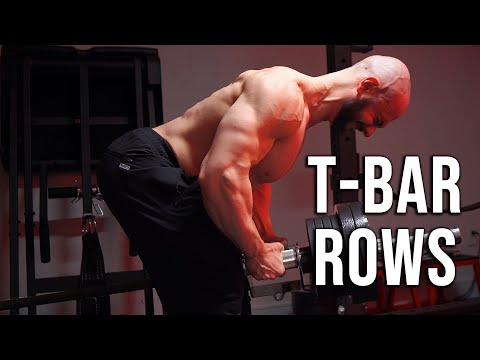
Are you looking to build a stronger back and improve your overall fitness? T-Bar rows might just be the exercise you need. This powerful move targets multiple muscles in your back, helping to create not only strength but also stability. Imagine your back as a sturdy bridge; the more robust the support beams are, the stronger and more resilient that bridge will be. By mastering T-Bar rows, you’re not just lifting weights—you’re reinforcing that bridge.
This exercise helps develop your lats, rhomboids, and trapezius muscles. These muscles play crucial roles in posture and upper body strength. Think of T-Bar rows as a way of sculpting your back into a well-defined “V” shape, enhancing both appearance and function.
However, it’s important to approach this exercise with care! While T-Bar rows can be incredibly beneficial, improper form can lead to injury. Always prioritize technique over weight—and remember that what works for one person may not be suitable for another.
Before diving into any new fitness routine, including mastering T-Bar rows, it’s wise to consult various specialists or reliable sources. Each body is unique; what works well for some may not apply universally. Seek guidance from trainers or physical therapists and consume information from trusted media outlets to ensure you’re making informed decisions about your workout plan.
The information provided in this article is intended solely for general informational and educational purposes. It does not constitute medical advice, diagnosis or professional treatment, and should not be considered a substitute for consultation with a qualified doctor or other licensed healthcare professional. Any health-related decisions should be made in consultation with accredited medical professionals.
While efforts have been made to ensure the information is accurate and up to date, no guarantees are given—either express or implied—regarding its accuracy, completeness, currency or suitability. Use of this information is at your own discretion.
It is strongly recommended to consult official sources such as the NHS (National Health Service) or other recognised medical institutions before acting on any information contained on this website or article. Under no circumstances should professional medical advice be ignored or delayed due to content read here.
This content is of a general and informational nature only. It is not intended to replace individualised guidance from a healthcare professional or to establish any doctor-patient relationship. The publication of this information does not imply any professional responsibility, guarantee or obligation on the part of the author or this site.
Unlocking the Secrets to a Stronger Back Through T Bar Rows
T-Bar rows are a fantastic exercise for building a stronger back. They focus on the muscles that help with good posture and everyday lifting. Think of your back like a bridge; it’s important that it’s strong enough to support everything above it.
When you do T-Bar rows, you’re mainly working your latissimus dorsi, or “lats,” which stretch from your upper arms down to your lower back. This is similar to how tree branches reach out from a trunk. Strong lats help with movements like pulling and lifting.
Here’s why T-Bar rows might be great for you:
Executing T-Bar rows correctly is essential. Start with a manageable weight. It’s like baking: if you add too much flour at once, the result may not be good.
Stand with feet shoulder-width apart and hold onto the handles or bar attached to the T-Bar machine. Bend at the hips while keeping your back straight, just like a hinge swinging open. Then pull the bar towards you while squeezing your shoulder blades together—imagine gathering leaves into a pile.
Be mindful about common mistakes:
T-Bar rows shouldn’t replace other exercises but can be an excellent addition to a balanced routine. Variety is key in keeping workouts engaging and effective.
Also, remember that rest and nutrition play vital roles in building muscle strength too! It’s all interconnected—like puzzle pieces forming a complete picture.
Lastly, it’s always smart to listen to your body. If something doesn’t feel right during exercise, it’s okay to stop or modify how you’re doing it.
Building strength takes time and persistence—much like training for a marathon rather than sprinting toward immediate results. Enjoy every step on this journey toward a stronger back!
Unlock Your Best Back: Simple Tips to Enhance Your T Bar Row Technique
The T-bar row is a great exercise for building back strength. It works the upper and lower back muscles, helping to create balance and stability. But to get the most out of this move, having good technique is crucial.
First, it’s important to set up your equipment right. Make sure the barbell is securely placed in a landmine attachment or corner of a wall. This helps prevent any wobbling as you lift.
When you grip the bar, stand with your feet shoulder-width apart. Your knees should be slightly bent, much like getting ready to jump. This stance gives you stability throughout the movement.
As you pull the bar towards your chest, keep your elbows close to your body. Think of bringing your elbows to your sides rather than just pulling with your arms. This focuses more on the back muscles.
Engage your core during the lift. Imagine you’re bracing yourself as if someone were going to poke you in the stomach. This will help maintain proper body alignment.
Pay attention to your back position as well. Avoid rounding or overextending; aim for a straight line from head to tailbone throughout the move.
Another tip: don’t rush! Take it slow and control each rep. It’s all about quality over quantity when it comes to strength training.
Lastly, remember to breathe properly. Inhale as you lower the weight and exhale forcefully through pursed lips when pulling up.
Practicing these tips can enhance not just how effective your T-bar rows are but also help prevent injury over time! Remember that everyone has different levels of fitness, so listen to what feels right for you and adjust accordingly as you continue strengthening your back muscles.
Unraveling the Truth Behind Rowing for a Stronger Back
Rowing is a fantastic way to work on building a stronger back. It engages multiple muscles in your upper body and core. Among the various rowing exercises, T-Bar rows are particularly effective.
When you perform T-Bar rows, you’re focusing on your lats, rhomboids, and traps. These are all key muscles that help support good posture and spinal health. Think of them like the cables of a suspension bridge; they hold everything together.
Here’s what makes rowing beneficial for your back:
A common misconception is that you need heavy weights to gain strength. However, proper form with lighter weights often yields better results. It’s similar to learning how to ride a bike; mastering balance comes before speed.
Proper technique in T-Bar rows is crucial. Keep your back straight and engage your core. This positioning helps protect your lower back from injury.
Many people focus only on their upper body when training their backs but don’t ignore the lower back! A strong lower back supports overall strength and stability.
Incorporating rowing into a balanced exercise routine can lead to better overall fitness. Combine it with other exercises for legs and core for maximum benefits.
Always listen to your body while exercising. If something feels wrong or painful, it’s wise to stop and reassess what you’re doing. Just like paying attention while driving ensures safety on the road.
In summary, rowing—especially T-Bar rows—can be an excellent way to strengthen your back when done correctly and safely. Remember that consistency matters more than intensity!
Mastering T-Bar rows can significantly enhance your back workout, fostering strength and stability. This exercise effectively targets the latissimus dorsi, rhomboids, and trapezius muscles, which play crucial roles in posture and upper body strength.
One of the key benefits of T-Bar rows is their ability to engage multiple muscle groups simultaneously. By using a narrow grip or wide grip variations, you can adjust the focus on different areas of your back. This versatility allows for a tailored approach to training that can meet individual fitness goals and needs.
Proper form is essential when performing T-Bar rows. Start with feet shoulder-width apart and hinge at the hips while maintaining a neutral spine. Pulling from the elbows rather than the hands ensures better activation of your back muscles and minimizes strain on your shoulders.
Incorporating this exercise into your routine can also improve functional movement patterns. A strong back supports daily activities, enhances athletic performance, and reduces the risk of injury.
As with any exercise, it’s important to listen to your body. Gradually increase weights as you become more comfortable with the motion. Always prioritize technique over heavy lifting to cultivate strength safely.
In summary, mastering T-Bar rows is an effective way to build a stronger back. With correct form and consistency, this exercise can lead to noticeable improvements in both appearance and functional capabilities.