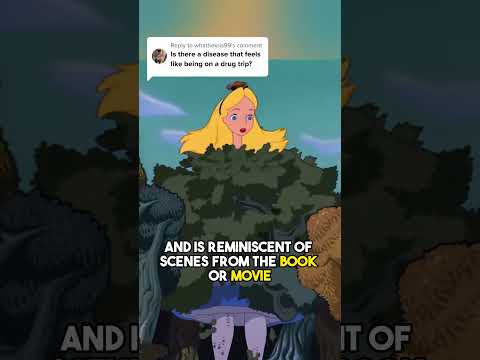
Have you ever felt like the world around you was changing size or shape, as if you were in a dream? This sensation is part of what’s known as Alice in Wonderland Syndrome (AIWS). Named after Lewis Carroll’s famous character, it describes a unique neurological condition that alters perception. Those experiencing AIWS might feel their body or surroundings are larger or smaller than they really are. Imagine standing next to a friend who appears giant one moment and tiny the next!
AIWS can affect anyone but is more commonly reported in children and young adults. The causes can vary widely, from migraines to infections, and even psychological conditions. Though it sounds fantastical, this syndrome can be quite distressing for those experiencing it.
It’s essential to approach this topic with curiosity and care. While AIWS can be intriguing, it’s also a medical condition that requires understanding. Always seek information from qualified specialists and reliable resources when exploring health issues like this one. Misinformation can lead to unnecessary worry or misinterpretation of symptoms. Knowledge is your best ally; let it guide you toward informed decisions about your health and well-being.
The information provided in this article is intended solely for general informational and educational purposes. It does not constitute medical advice, diagnosis or professional treatment, and should not be considered a substitute for consultation with a qualified doctor or other licensed healthcare professional. Any health-related decisions should be made in consultation with accredited medical professionals.
While efforts have been made to ensure the information is accurate and up to date, no guarantees are given—either express or implied—regarding its accuracy, completeness, currency or suitability. Use of this information is at your own discretion.
It is strongly recommended to consult official sources such as the NHS (National Health Service) or other recognised medical institutions before acting on any information contained on this website or article. Under no circumstances should professional medical advice be ignored or delayed due to content read here.
This content is of a general and informational nature only. It is not intended to replace individualised guidance from a healthcare professional or to establish any doctor-patient relationship. The publication of this information does not imply any professional responsibility, guarantee or obligation on the part of the author or this site.
Unraveling the Enigmatic Perceptions of a Curious Mind
Alice in Wonderland Syndrome (AIWS) is a fascinating condition that alters a person’s perception of reality. Named after Lewis Carroll’s famous story, it causes unusual sensations and distortions.
People with AIWS might feel that their bodies are changing size or shapeshifting. For example, one may perceive their hands as large or small compared to the rest of the body, like Alice when she eats the magic cake.
Common symptoms include:
This syndrome often occurs in younger individuals and can be linked to migraines, epilepsy, or even infectious diseases like mono. It’s not caused by any single factor but rather a combination of neurological processes.
Imagine your brain as a busy train station. Normally, trains (signals) arrive and leave on time. But sometimes, due to traffic jams (neurological disturbances), they get delayed or confused. This can lead to distorted perceptions.
Despite its whimsical name, AIWS can be unsettling for those who experience it. It’s important to understand that these episodes generally do not indicate severe underlying conditions.
If you face these experiences often, keeping a journal might help track your symptoms and triggers. Noting when these sensations happen could provide insight into managing them better.
Like many health conditions, AIWS is still being studied. Researchers are working to uncover the exact mechanisms behind it and how best to help those affected by it.
Awareness allows for better understanding and empathy toward individuals facing this uncommon condition. Encouraging open dialogue about such topics can reduce stigma and promote mental well-being in our communities.
Always seek support from healthcare professionals if you have concerns regarding symptoms like these. They can provide guidance tailored to individual needs and conditions without making assumptions based on what you read online.
Unlocking the Mysteries of Artificial Intelligence and the Human Experience
Artificial Intelligence (AI) is a fascinating field that often feels like something from a storybook. It’s about teaching machines to learn from experience and make decisions, much like how humans do.
When we think of AI, we might picture robots or advanced computers. But AI exists in many forms, including smart assistants on our phones or algorithms that recommend movies. Just like in “Alice in Wonderland,” where Alice explores strange and unexpected scenarios, AI can lead us into uncharted territory of understanding.
One interesting phenomenon related to perception is Alice in Wonderland Syndrome (AIWS). This condition affects how individuals perceive themselves and their surroundings. People with AIWS might feel larger or smaller than they really are. It’s similar to how Alice grows and shrinks after eating certain foods.
Here are some key aspects of AIWS:
Understanding AIWS helps us grasp the deeper mystery of how the brain processes reality. It’s important to remember that our brains have limitations and can sometimes misinterpret signals.
The connection between AI and human experience is profound. Just as we are trying to teach machines about human behavior through data, conditions like AIWS remind us of our own complexities. The way we perceive reality is shaped by numerous factors including our emotions and past experiences.
In the world of both humans and machines, understanding perception is key. It challenges us to think critically about what we see and experience every day.
To sum it up:
– AI teaches us about intelligence.
– Conditions like AIWS reveal the quirks of the human mind.
– Both realms enhance our understanding of what it means to be aware.
By exploring both topics—AI and the unique quirks of human perception—we deepen our appreciation for both technology’s potential and the intricacies of human experience.
Exploring the Mind of a Curious Girl in a Whimsical World
Let’s take a whimsical journey into a curious girl’s mind, much like Alice in “Alice in Wonderland.” But this time, we’re exploring something intriguing: Alice in Wonderland Syndrome.
Alice in Wonderland Syndrome (AIWS) isn’t as magical as it sounds. It’s a real neurological condition that affects the way you perceive the world around you. Imagine feeling like you’re growing or shrinking, or objects appearing larger or smaller than they really are.
Symptoms can include:
These experiences can be confusing and sometimes frightening. They often occur during migraine headaches but can also happen without any headaches at all.
The name comes from Lewis Carroll’s story because Alice experienced similar perceptions. But it’s important to know that AIWS is not just about fun and games; it’s a sign that something might be happening in your brain.
Researchers aren’t sure what causes AIWS exactly. Some think it could relate to changes in how the brain processes sensory information. Stress, lack of sleep, or specific infections might trigger symptoms too.
If someone experiences these sensations regularly, it’s worth talking to a healthcare provider. While most people find relief when triggers are managed, understanding your body is crucial.
Alice’s journey teaches us about curiosity and exploration but also reminds us to pay attention to our minds and bodies. If something feels off, seek understanding rather than fear.
Remember, curiosity can lead to knowledge! Understanding conditions like AIWS helps demystify our experiences and promotes informed choices regarding health. Stay curious—but also stay informed!
Alice in Wonderland Syndrome (AIWS) is a fascinating neurological condition that affects perception. People with AIWS can experience distortions in body image, time, and the size of objects. Imagine looking at your own hand and feeling as if it’s much larger or smaller than it truly is. This disorientation can be unsettling, akin to stepping into a dream where nothing feels quite right.
The condition is often associated with migraines, epilepsy, or infections like Epstein-Barr virus. This suggests that AIWS could be linked to changes in how the brain processes sensory information. Understanding these connections is crucial for better diagnosis and treatment options.
Interestingly, despite its name derived from Lewis Carroll’s whimsical story, AIWS should not be dismissed as mere fantasy. The experiences reported are very real and can have significant effects on an individual’s daily life.
Recognizing AIWS raises important questions about the nature of perception itself. It challenges us to consider how our brains interpret reality and the impact of neurological conditions on this process. Ongoing research into AIWS may pave the way for deeper insights into similar disorders.
In summary, Alice in Wonderland Syndrome serves not only as a peculiar medical phenomenon but also as a reminder of the complexities of human perception. It encourages further investigation into the brain’s inner workings while offering empathy to those who navigate its bewildering experiences every day.