The information provided in this article is intended solely for general informational and educational purposes. It does not constitute medical advice, diagnosis or professional treatment, and should not be considered a substitute for consultation with a qualified doctor or other licensed healthcare professional. Any health-related decisions should be made in consultation with accredited medical professionals.
While efforts have been made to ensure the information is accurate and up to date, no guarantees are given—either express or implied—regarding its accuracy, completeness, currency or suitability. Use of this information is at your own discretion.
It is strongly recommended to consult official sources such as the NHS (National Health Service) or other recognised medical institutions before acting on any information contained on this website or article. Under no circumstances should professional medical advice be ignored or delayed due to content read here.
This content is of a general and informational nature only. It is not intended to replace individualised guidance from a healthcare professional or to establish any doctor-patient relationship. The publication of this information does not imply any professional responsibility, guarantee or obligation on the part of the author or this site.
Ever wondered how something as simple as a measurement can hold the key to understanding scoliosis? It’s like trying to read the map to a hidden treasure; you gotta know where you’re looking. Scoliosis affects so many people, and knowing about Cobb angle measurements can make a big difference in managing this condition.
So, what’s the Cobb angle? Simply put, it’s a way to quantify the curvature of your spine. It helps doctors figure out how severe the scoliosis is and what treatment might be needed. Think of it like checking your car’s alignment; if it’s off, things need adjustment.
This article is here to break down Cobb angles in a clear and approachable way. We’ll look at how these measurements are taken, their significance, and why they matter for individuals with scoliosis.
Remember though—this content isn’t a substitute for medical advice. Always consult with a healthcare professional before making any health decisions. Understanding is just the first step towards care, right?
Understanding the Curves: Navigating Life with Cobb Angle Scoliosis
Understanding Cobb Angle Scoliosis
Cobb angle scoliosis might sound complicated, but it’s really just a way to measure the curve of your spine. When someone has scoliosis, their spine curves to the side. Doctors use a specific angle, known as the Cobb angle, to determine how severe that curve is.
What is the Cobb Angle?
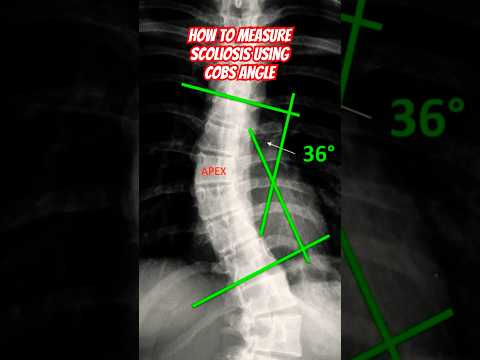
The Cobb angle is calculated using X-rays. Basically, physicians draw lines along the most tilted parts of the vertebrae—those are the bones in your back. The angle formed at their intersection gives an idea of how much the spine has curved. It’s measured in degrees.
This measurement helps guide treatment decisions. A small Cobb angle might only need monitoring while larger angles could need some intervention like bracing or even surgery.
How Does Scoliosis Affect Daily Life?
You might wonder how scoliosis impacts everyday life. Well, many people with mild scoliosis live without serious issues. They can play sports, work out, and do everything else just like anyone else. But more significant curves can lead to discomfort or pain over time.
Bracing for Scoliosis
If a child has a Cobb angle between 20 and 40 degrees and they’re still growing, a doctor might recommend bracing. Think of it like wearing a cast but instead it’s meant to prevent further curving while they grow.
The brace doesn’t fix the curve but helps keep it from getting worse during those growth spurts.
Surgery Considerations
Surgery becomes an option when curves exceed about 40-50 degrees and there’s risk of serious complications or pain. During spinal fusion surgery, rods may be attached to straighten the spine over time.
This isn’t taken lightly; it usually comes after other treatments have been tried and if they haven’t helped enough.
Misinformation About Scoliosis
A common myth? That wearing heavy backpacks causes scoliosis when in fact it’s often genetic or related to other conditions. So stressing over backpack weight won’t change someone’s risks!
Conclusion: Understanding Your Spine
Navigating life with scoliosis does involve understanding what that Cobb angle means for you or your loved one. If curves are mild, things may be pretty normal; if not so mild—well then being proactive can make all the difference!
If you’re curious about your own back health or someone else’s condition seems concerning? It’s important to chat with healthcare providers who can offer guidance tailored just for them!
Understanding the Healthy Limits of Spinal Curvature
The spine naturally curves in certain ways. It has a few healthy curves that help with balance and mobility. But when these curves become too pronounced, it can lead to problems, like scoliosis.
Scoliosis is a condition where the spine curves sideways, often in an ‘S’ or ‘C’ shape. The amount of curvature is measured using something called the Cobb angle. It’s named after Dr. John Cobb, who developed this method back in the 1940s.
What is the Cobb Angle?
The Cobb angle measures the degree of spinal curvature on an X-ray. Doctors identify two vertebrae—the highest and lowest points of the curve—and draw lines along them. The angle formed at their intersection gives you the Cobb angle.
For example, if someone has a Cobb angle above 10 degrees, they may be diagnosed with scoliosis. A mild case might have a Cobb angle between 10 and 20 degrees, whereas severe cases can exceed 40 degrees.
Healthy Limits
A healthy spine usually maintains curves within specific limits: around 20 to 45 degrees for cervical (neck) curvature and thoracic (upper back) curvature below 50 degrees are seen as normal ranges for adults. If curvatures go beyond this range, especially over time, it might impact overall health.
- A gradual increase in pain
- Trouble breathing due to lung compression
- Changes in posture that affect daily life
Why Monitoring Matters?
Knowing your Cobb angle might seem technical but it’s crucial for tracking scoliosis’s progression. Regular check-ups can help catch any significant changes early on.
If you or someone you know has scoliosis, don’t dismiss any new symptoms like discomfort while sitting or standing for long periods—these could be signs that your situation needs reassessment.
Coping Strategies
If scoliosis is diagnosed or suspected, managing it often involves physical therapy and sometimes bracing for younger patients whose spines are still growing. In some instances, surgery may be recommended when curvatures worsen significantly.
- Stretching exercises can help maintain flexibility
- Strengthening core muscles supports spinal alignment
- A healthy lifestyle contributes to overall wellness
Misinformation Around Scoliosis
You might hear about many myths regarding scoliosis—like thinking it’s caused by bad posture or carrying heavy backpacks. Honestly though, research shows these factors don’t cause scoliosis but may affect its severity.
If you’re concerned about spinal health—it’s always best to discuss these topics with a healthcare professional who can give tailored advice based on individual circumstances.
A Simple Guide to Understanding Scoliosis with Cobb Angle Measurements
Understanding Scoliosis
Scoliosis is a condition where the spine curves sideways. Normally, we think of the spine as a straight line from our neck down to our lower back. But in scoliosis, it can take on an “S” or “C” shape instead.
Many people have mild cases, and it often doesn’t cause major problems. However, for some, scoliosis can lead to discomfort or issues with movement as they grow.
What is Cobb Angle?
The Cobb angle is a way to measure the curvature of the spine in individuals with scoliosis. It’s named after Dr. John Cobb, who developed this method back in the 1940s.
To measure this angle, doctors look at X-rays of the spine. They find the most tilted vertebrae at both ends of the curve and draw lines along them. The angle where these lines intersect gives them the Cobb angle.
Why Does It Matter?
The Cobb angle helps determine how severe a person’s scoliosis is. Generally, if it’s less than 20 degrees, it’s considered mild; between 20-40 degrees is moderate; and over 40 degrees is severe.
This measurement can influence treatment options—like observation versus bracing or even surgery—to manage any potential complications later on.
Real-Life Example
Imagine you have a garden hose that’s kinked in certain spots. If you know how much it’s kinked (like measuring that with Cobb angles), you can decide whether to straighten it out carefully or if you need to replace part of it entirely.
Treatment Options
- Observation: For mild curves under 20 degrees, doctors may simply monitor progress over time.
- Bracing: If a child has moderate scoliosis and their bones are still growing, they might wear a brace to help prevent further curvature as they develop.
- Surgery: In more severe cases, surgery may be recommended to correct significant curvatures and prevent future health issues like difficulty breathing or pain.
Myths About Scoliosis
- Scoliosis is caused by carrying heavy backpacks: This is not true! While poor posture can affect back health, scoliosis has more genetic and congenital factors involved.
- You should avoid exercise: Staying active can actually help strengthen muscles around your spine!
Your Next Steps
If you or someone you know might have scoliosis—or if you’re just curious—talking with a healthcare professional can provide clarity on what steps to take next based on individual circumstances!
Understanding Cobb angle measurements is crucial in managing scoliosis, a condition characterized by an abnormal curvature of the spine. This measurement helps determine the severity of the curve and guides treatment decisions. So, what’s the Cobb angle?
The Cobb angle is calculated using X-rays of the spine. Doctors identify the most tilted vertebrae at both ends of the curve and draw lines from these points. The angle formed where these lines intersect is called the Cobb angle. A larger angle usually means a more significant curvature.
Cobb angles below 20 degrees are typically considered mild scoliosis, while angles above 40 degrees can lead to complications such as pain or respiratory issues. It’s interesting to note that not all curves cause problems; some people may live with scoliosis without experiencing symptoms.
Treatment often depends on age, severity, and potential progression of the curve. For mild cases, regular monitoring might be sufficient. However, more severe curvatures may require bracing or even surgical intervention.
Accurate measurements are essential for effective care and to prevent unwarranted anxiety or overtreatment. Scoliosis management isn’t one-size-fits-all; understanding each patient’s unique situation is key.
The challenge lies in conveying medical information clearly while ensuring empathy for those affected by this condition. Patients need to feel informed about their options without fearmongering regarding potential outcomes.
In reflecting on Cobb measurements, it becomes clear that they’re not simply numbers but rather guides that shape individualized care plans for patients facing scoliosis.