The information provided in this article is intended solely for general informational and educational purposes. It does not constitute medical advice, diagnosis or professional treatment, and should not be considered a substitute for consultation with a qualified doctor or other licensed healthcare professional. Any health-related decisions should be made in consultation with accredited medical professionals.
While efforts have been made to ensure the information is accurate and up to date, no guarantees are given—either express or implied—regarding its accuracy, completeness, currency or suitability. Use of this information is at your own discretion.
It is strongly recommended to consult official sources such as the NHS (National Health Service) or other recognised medical institutions before acting on any information contained on this website or article. Under no circumstances should professional medical advice be ignored or delayed due to content read here.
This content is of a general and informational nature only. It is not intended to replace individualised guidance from a healthcare professional or to establish any doctor-patient relationship. The publication of this information does not imply any professional responsibility, guarantee or obligation on the part of the author or this site.
Have you ever felt a sudden snap in your ankle, like a rubber band breaking? It’s unsettling, isn’t it? For many people, that could signal a torn Achilles tendon. This injury is more common than you might think, especially among athletes. Understanding the Thompson test can really make a difference if you’re facing this issue.
The Thompson test is a simple but effective examination used to determine if there’s an injury in the Achilles tendon. If you’ve ever wondered how doctors check for such injuries without complicated equipment, you’re in the right place. This article will break down how the test works, why it matters, and what to expect during the process.
Your health decisions should never hinge solely on what you read here. While this information aims to clarify and inform, always consult with a healthcare professional for advice tailored to your specific situation. Together, let’s uncover what the Thompson test can do for those struggling with potential Achilles tendon injuries.
Uncovering the Meaning Behind Your Ankle’s Reaction
Understanding Your Ankle’s Reaction
So, you’re curious about that ankle reaction and what it means, right? It’s totally understandable. Your body often gives you clues about what’s going on inside. One important test that can help pinpoint issues with your Achilles tendon is the Thompson Test.
What Is the Thompson Test?
The Thompson Test is a simple assessment used to check for a torn Achilles tendon. The Achilles tendon connects the calf muscles to the heel bone and helps you walk, run, and jump. When it’s torn, you might feel pain or even have trouble moving your foot.
How Does the Test Work?
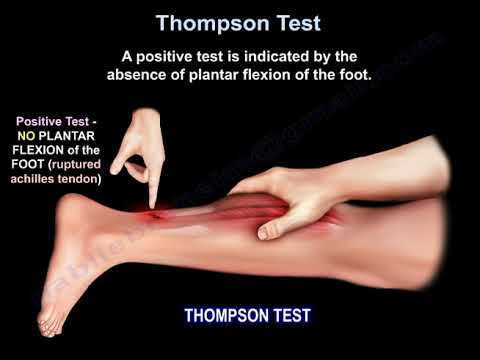
During this test, you’ll be asked to lay face down. The examiner squeezes your calf muscle gently while observing your foot’s response. If your foot moves downward (that’s called plantar flexion), it usually means the tendon is intact. If there’s no movement, it might suggest a tear.
Why Might My Ankle React Like That?
Your ankle’s reaction during this test can tell a lot about its health. If there’s weakness or no movement at all when squeezing the calf, that’s a potential sign of injury. But hey, don’t jump to conclusions just yet; many factors could affect it.
- You could have a partial tear instead of a full one.
- Pain or swelling around the area may interfere with movement.
- Your nerves could react differently also due to various conditions like diabetes.
Real-Life Analogy
Think of your Achilles tendon like a rubber band attached between two objects: one being your calf and the other your heel bone. If that rubber band has been stretched too far or broken, it won’t function as it should anymore—just like how squeezing doesn’t move the foot if there’s an issue present.
What To Do Next?
If you’re experiencing problems with your ankle or suspect an injury, consider talking to someone who can provide more guidance—like a healthcare professional. They can do more tests and help you understand what might be going on.
The important thing here is to listen to your body. Pay attention to any signs it gives you—even if they seem small! It’s all about making sure everything works as it’s supposed to.
You know, our bodies are pretty amazing machines but sometimes they need some extra help when things go awry! Just keep an eye out for unusual symptoms and take them seriously!
Exploring the Precision of a Key Diagnostic Tool for Ankle Injuries
Understanding the Thompson Test
The Thompson Test is a simple yet effective way to assess for a torn Achilles tendon. This tendon connects your calf muscles to your heel bone, playing a vital role in walking and jumping. When it tears, it can cause significant pain and hinder movement.
How does it work?
During the test, the person being examined lies face down with their feet hanging off the edge of an exam table. The examiner then squeezes the calf muscle gently. If the Achilles tendon is intact, this will cause the foot to point downward, a motion called plantar flexion.
If there’s a tear, however, this movement won’t happen. It’s quite straightforward but surprisingly effective at indicating whether something is wrong with that tendon.
Why is it important?
The beauty of the Thompson Test lies in its simplicity and quick results. In many cases, healthcare professionals use this test as an initial screening tool before they decide on further imaging tests like ultrasounds or MRIs.
This can save time and help people get on the road to recovery faster since an accurate diagnosis can lead to appropriate treatment sooner.
Real-life implications
Let’s say you’re playing basketball and land awkwardly, suddenly feeling sharp pain at your heel. A coach or trainer might perform the Thompson Test right on-site to see if you need more extensive evaluation.
A negative result (meaning your Achilles tendon seems fine) might let you know that it’s just a sprain instead of something worse! On the other hand, if there’s no foot movement when squeezing your calf, well then that suggests you might need further investigation.
Limitations of the Thompson Test
This test isn’t foolproof; it has some limitations. For example, if you’re dealing with swelling or bruising around your ankle area, it may not yield accurate results.
- Your pain level might affect how well you respond during testing.
- If there are other injuries present, they might mask signs of an Achilles tear.
The big picture
The Thompson Test should be seen as one piece of a larger puzzle when diagnosing ankle injuries. While it’s helpful and widely used in clinical settings—like sports medicine—the full context of someone’s symptoms needs consideration too.
Keep questioning!
If you’re ever unsure about any medical procedure or finding related to ankle injuries—or anything really—don’t hesitate to ask questions! Understanding what happens during tests like these makes all the difference in handling what comes next.
Understanding the Key Indicator of an Achilles Tear
When we talk about Achilles tears, one crucial aspect that comes up is the Thompson test. This is a simple, yet effective way to check if your Achilles tendon might be torn.
So, what’s the Thompson test? Essentially, it involves someone squeezing your calf muscle while you’re lying down. If your foot doesn’t move at all, that could indicate a tear. Seriously! It’s like testing if a rubber band works; if you stretch it and nothing happens, there’s likely something wrong.
But why focus on the Achilles tendon? The Achilles tendon is located at the back of your ankle and connects your calf muscles to your heel bone. It allows you to walk, run, and jump. That’s why any injury here can be pretty serious for active folks.
Now let’s get into how a tear usually happens. Many people sustain a tear while playing sports—especially basketball or tennis—where sudden movements are common. Imagine running and suddenly stopping; it puts a lot of strain on that tendon!
What Happens During a Tear?
A complete tear means that the tendon has snapped entirely. You might hear a loud pop or feel like someone kicked you in the back of your leg. Yikes! Pain and swelling usually follow right after.
Interestingly, not all tears are alike. Some may only partially damage the tendon but still send you straight to discomfort town.
The Importance of Early Detection
Catching an Achilles tear early can make all the difference in treatment options. If it’s just partially torn, rest and rehabilitation might do the trick. On the other hand, complete tears often require surgery.
This brings us back to our friend, the Thompson test—it gives hints about what might be going on inside your leg without needing fancy machines or gadgets!
What Should You Do If You Suspect an Injury?
- If you’re experiencing sudden pain in that area;
- If you notice swelling or bruising;
- If putting weight on your foot feels painful;
- If you’re struggling with movement; then it’s wise to seek help from a health professional.
Getting checked out quickly can lead to better outcomes in recovery overall.
So remember: understanding these signs—and tests—can be really helpful if you’re worried about an injury like this one!
Understanding the Thompson Test for Torn Achilles Tendons
The Thompson test is an important clinical examination used to assess potential tears in the Achilles tendon, which is crucial for walking and running. The Achilles tendon connects your calf muscles to your heel bone.
During the test, a healthcare provider squeezes the calf muscles while the patient lies prone or face down, with their feet hanging off the exam table. If the foot moves toward the ground—indicating plantar flexion—it suggests that the tendon is intact. If there’s no movement, it may point to a tear.
This test is valuable because it’s quick and requires no special equipment. However, it’s not foolproof. False negatives can occur if there’s only a partial tear or if other factors affect calf muscle response.
Additionally, understanding how to conduct this test properly is essential—technique matters! As with many clinical tests, it’s part of a broader assessment including patient history and imaging for a complete diagnosis.
In practice, communicating effectively with patients about their symptoms and concerns enhances trust and encourages better outcomes. Remembering that each case is unique helps tailor treatment plans effectively.
The Thompson test serves as a great example of how hands-on evaluation plays a role in diagnosing musculoskeletal issues while reminding us of our responsibility to understand both clinical techniques and patient perspectives fully.